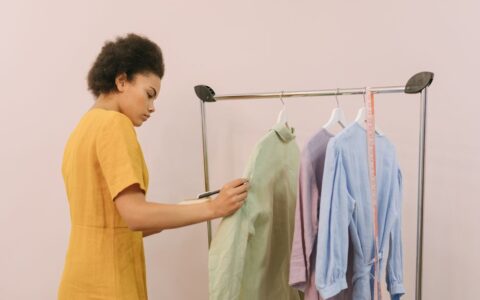


An outfit is judged from a few focal points. Putting the quality where attention lands makes the rest of it invisible, regardless of what it cost.

Where Attention Actually Goes
People read an outfit from a small number of places. The face and whatever is near it, the shoes, the bag, and the overall fit at shoulder and hem. Fabric quality in the middle of an outfit is barely assessed, which means the mid layers are the right place to economize. This is why the same budget distributed differently produces different results. Five mid price items read as uniformly average. Two good items and three cheap ones read as better than the average of the five, because the good ones occupy the positions that are examined and the cheap ones do not.
Shoes carry the most weight of any single item. They are the most common quality signal, partly because cheap footwear has a recognizable silhouette and partly because condition shows clearly. A good pair in good condition elevates everything above them.
The area near the face is the second priority. A scarf, a collar, knitwear at the neckline, earrings. Texture and material are legible at that distance in a way they are not at waist level, which is why a wool scarf changes an outfit more than an expensive shirt under a jacket.
Spend on Fit Rather Than Fabric
Fit is the single most visible difference between expensive and cheap clothing, and it is purchasable at any price through alteration. A cheap garment that fits properly looks considerably better than an expensive one that does not, and the alteration costs a fraction of the price difference. Three alterations cover most needs. Hemming trousers to the correct length, taking in a waistband, and shortening sleeves. Each is inexpensive and quick, and each addresses the specific proportions that make off the rack clothing look off the rack. Shoulders are the exception, being expensive to alter, which is why shoulder fit should drive the size choice on anything structured.
Budget for alterations as part of the purchase rather than as an extra. A thirty dollar pair of trousers plus fifteen dollars of hemming is a forty five dollar garment that fits, which beats a ninety dollar pair that does not.
This also makes secondhand shopping considerably more productive, because the pool of well made garments in slightly wrong sizes is large and cheap. A quality piece altered to fit is the best value available in clothing.
Keep the Color Scheme Narrow
Mixing price points works best within a disciplined palette, because color coherence is what makes an outfit read as deliberate. Two neutrals for everything structural and two or three accents for small pieces is the structure, and it costs nothing to adopt. Within that scheme, cheap items are much harder to identify. A black cotton tee under a good jacket is a black tee. The same tee in a slightly off color next to a different slightly off color draws attention to both, because mismatched colors read as accidental and accidental reads as cheap.
Black is the least forgiving color at low price points, because cheap black fabric fades toward gray and the difference between two blacks is immediately visible. Navy, charcoal and brown are more forgiving and often look more expensive in inexpensive fabric.
Avoid matching an inexpensive item to an expensive one in the same color family unless the match is exact. Near misses are worse than deliberate contrast, which is why keeping cheap items in the plainest colors is the safer approach.
What to Buy Cheap Without Compromise
Plain basics in heavier weights are the strongest value in budget clothing. Tees, long sleeve layers, simple knitwear and plain shirts are made to a specification, and a heavier fabric from an inexpensive retailer outperforms a lighter one from an expensive brand. Fabric weight, where published, is the useful number. Anything that sits under something else can be cheap without consequence. Base layers, mid layers worn under a jacket, and anything that will not be seen in full. This is a substantial portion of most outfits and it is the easiest place to reduce spending without any visible effect.
Trend pieces belong here too, since their life is short by definition. Buying the inexpensive version of something you may not want in a year is the correct choice, and the money saved funds the pieces that stay.
What not to buy cheap is anything structured. Blazers, coats and tailored trousers depend on internal construction that cannot be faked, and a cheap version loses its shape within weeks. These are the items where the difference is visible from across a room.
Condition Is the Great Equalizer
Clean, pressed and well maintained clothing reads as expensive at any price. Scuffed shoes, pilled knitwear, wrinkled shirts and visible wear read as cheap even on genuinely expensive items. Maintenance costs almost nothing and does more than any single purchase. Learn two repairs and the effect compounds. Replacing a button and closing a seam cover most failures in everyday clothing. A sweater comb removes pilling and restores knitwear that would otherwise be retired. Shoe polish and a brush take five minutes and transform the most visible item in the outfit.
Wash less and dry flat where possible. Most clothing is damaged by machine drying rather than by wearing, and extending garment life is cheaper than replacing garments. This matters most for the inexpensive items, which have the least margin before looking worn.
The overall result of this approach is a wardrobe where a small number of items are genuinely good, everything else is plain and inexpensive, and the whole thing is maintained. That distribution costs less than buying mid range across the board and looks considerably better, which is the entire argument for mixing price points deliberately rather than by accident.