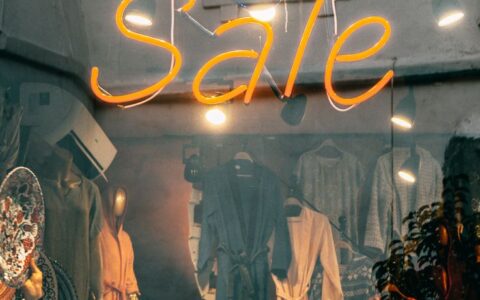


Clearance areas are disorganized on purpose. The time spent searching is the mechanism, and knowing that changes how to approach one.

Disorder Is a Merchandising Choice
Mixed sizes, no size markers, crowded rails and jumbled tables are not neglect. The arrangement increases the time spent in the section, and time spent correlates with purchases made. It also creates a sense of discovery, where finding something becomes a small reward in itself rather than a straightforward transaction. The same logic explains why clearance is usually placed at the back of a store. Reaching it means passing full price merchandise, and the route is designed rather than incidental. Online equivalents work similarly, with sale sections that are poorly filterable and cannot be sorted usefully by size.
The effect of the disorder is that you evaluate items you would never have selected deliberately. Encountering a garment while searching for something else is a different experience from looking for it, and it produces purchases based on availability rather than need.
None of this makes clearance bad value. The discounts are real and the merchandise is often current. The point is that the environment is arranged to extend your stay and broaden what you consider, and a plan is the countermeasure.
Work the Section Efficiently
Check your size first and only. Walking the rail looking for your size rather than for items you like cuts the time by most of it and removes the main source of unplanned purchases, which is falling for something in the wrong size and rationalizing it. Have a list before entering. Three or four specific items with sizes and a maximum price each. A clearance rail with a list is a short errand. The same rail without one is an hour, and the difference in what leaves with you is substantial.
Set a time limit. Fifteen minutes is enough to cover any clearance section for your size, and the limit prevents the gradual shift from searching to browsing that the layout is designed to produce.
Check the item condition carefully, because clearance stock has often been handled extensively. Missing buttons, broken zips, marks and stretched areas are common and are the reason some items reached clearance in the first place. A damaged item at seventy percent off is usually still a bad purchase.
Understand Why Items Are There
Clearance stock arrives for a small number of reasons, and the reason affects whether the item is a good purchase. End of season merchandise is the best case, since the item is simply out of time rather than unwanted, and it will be entirely wearable next year. Unpopular sizes and colors are the second group. Nothing is wrong with the garment except that most customers did not want that version, which is only relevant if you are one of the customers who does. For someone at either end of a size range, clearance is frequently the best value in the store.
Damaged and returned items are the third group and the one to inspect. Store returns are often placed into clearance, sometimes with the original problem unresolved. Checking seams, fastenings and the fabric surface takes a few seconds and prevents the most common disappointment.
Made for clearance merchandise is the fourth and is worth recognizing. Larger chains produce lower specification items for promotional events, and these appear in clearance at impressive percentages off a price they never carried. The fabric composition and the item code distinguish them from regular stock.
The Sizing Trap
The most expensive clearance mistake is buying the wrong size because the price was good. An item that does not fit is a complete loss regardless of discount, and clearance purchases are frequently final sale, which removes the usual correction. Try things on, even when it is inconvenient. The clearance section is exactly where sizing is most variable, because the stock spans several seasons and production runs, and a size that fits in one line may not in another from the same brand.
Where trying on is not possible, measure. Knowing your own chest, waist, hip and inside leg measurements, and comparing against the garment, resolves most uncertainty in under a minute. This is the single most useful preparation for any clearance shopping.
Resist the alteration rationalization unless you will actually do it. A garment bought two sizes too large with the intention of having it taken in is usually a garment that stays untouched. Alterations are worth paying for and they only count if they happen.
When to Skip It Entirely
If you have no list, the correct decision is to walk past. Clearance shopping without a target produces purchases based on price rather than need, and the accumulated result is a wardrobe of discounted items that are rarely worn. There is no saving in buying something cheap that you do not use. Skip it also when the category is one where you need a specific fit or a specific specification. Shoes, structured garments and anything technical are poorly served by whatever happens to be available, and the right item at full price is cheaper than the wrong item at a discount.
The strongest use of clearance is for the staples you know you will replace. Basics in your size, in neutral colors, from a brand whose fit you have already confirmed. That is a repeatable purchase where the discount is a pure gain and the risk is close to zero.
Judged a few weeks later, clearance purchases divide reliably into the ones from the list and the ones discovered on the rail. Noticing that pattern in your own wardrobe is more persuasive than any rule, and it tends to shorten future visits considerably.